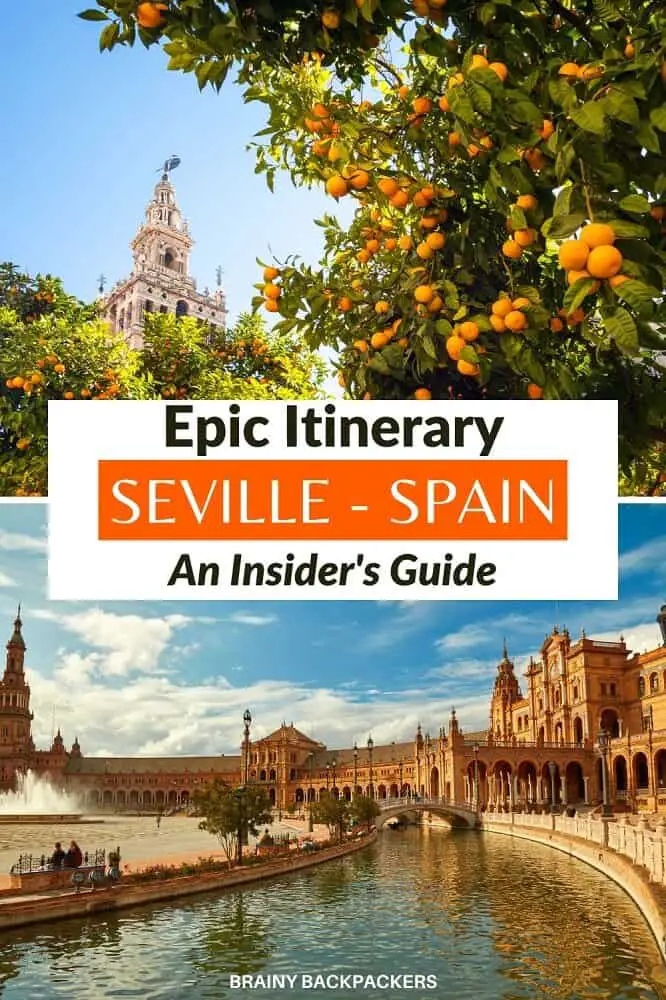
You’re planning to spend 3 days in Seville and are not sure what to do. Then you’re in good hands!
If there’s one city that has a special place in my heart, it’s Seville, Andalusia’s charming capital city. I first set foot there in 2003, I’ve lived there twice, and it has been my second home for years while living in other parts of Andalucia.
There are so many things to explore in this beautiful city, and 3 days is far from enough to truly savor the Seville. Yet, it’s enough to explore the main attractions and have time for tapas and drinks Andalucia style.
I’ve curated this 3-day Seville itinerary for you so that you can enjoy the best of the city on a long weekend, though I’m sure you’ll want to return.
Disclosure: This post may contain affiliate links. That means that if you make a purchase through one of those links, I will get a small commission at no extra cost to you.
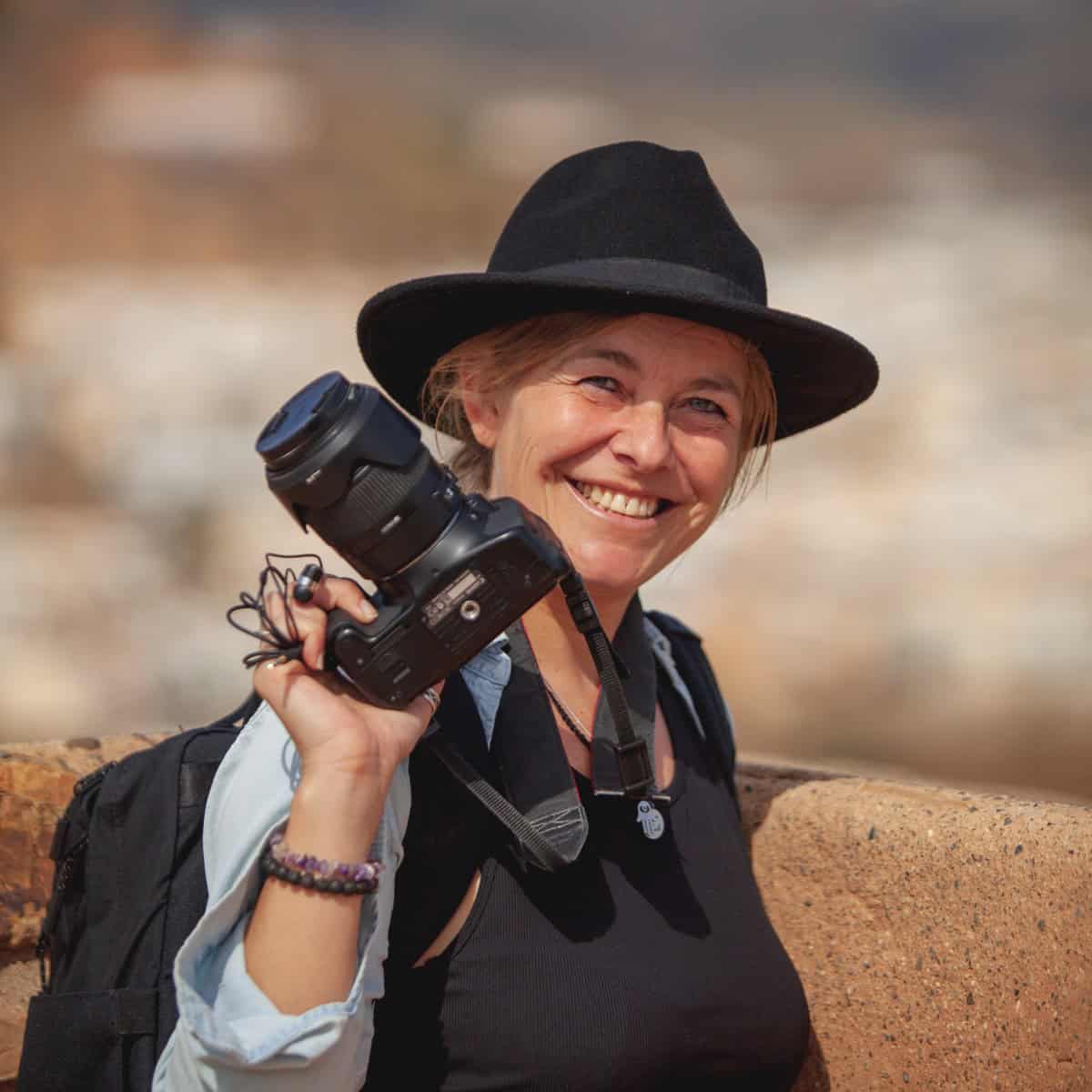
Hi, I’m Linn Haglund, the face behind Brainy Backpackers. I’ve been based in Spain for the last 10+ years, and travel locally and abroad whenever I have a chance. I’m passionate about responsible travel, slow and off the beaten path travel, and outdoor activities, especially hiking. I’m currently slow traveling in my van Persistence (Persi among friends) with my fiancée Mohammed and rescue puppy Atlas. I’m excited to help you explore this planet responsibly!
PIN IT FOR LATER!
🙋JOIN OUR THRIVING FACEBOOK COMMUNITY FOR ANDALUCIA TRAVEL TIPS AND INSPIRATION!
3 days in Seville itinerary
Day 1: UNESCO sites and Santa Cruz
Start the first day of your Seville itinerary by visiting the most central attractions. Don’t forget your camera because this is going to be an amazing cultural day!
Have breakfast either at your hotel or in a bar. The traditional breakfast in Spain, Seville being no exception, is Tostada. This is simply toasted bread buns or baguettes with tasty stuff on top.
My favorite vegan option (and there aren’t many) is Tostada with olive oil, tomato, and salt. So simple and so tasty. In a lot of places, you might even get the tomato delightfully blended with garlic, salt, and olive oil.
TOP TIME-SAVING TIP!
👉Get combined tickets for the Cathedral, La Giralda, and Alcazar! Check availability here.
Seville Cathedral
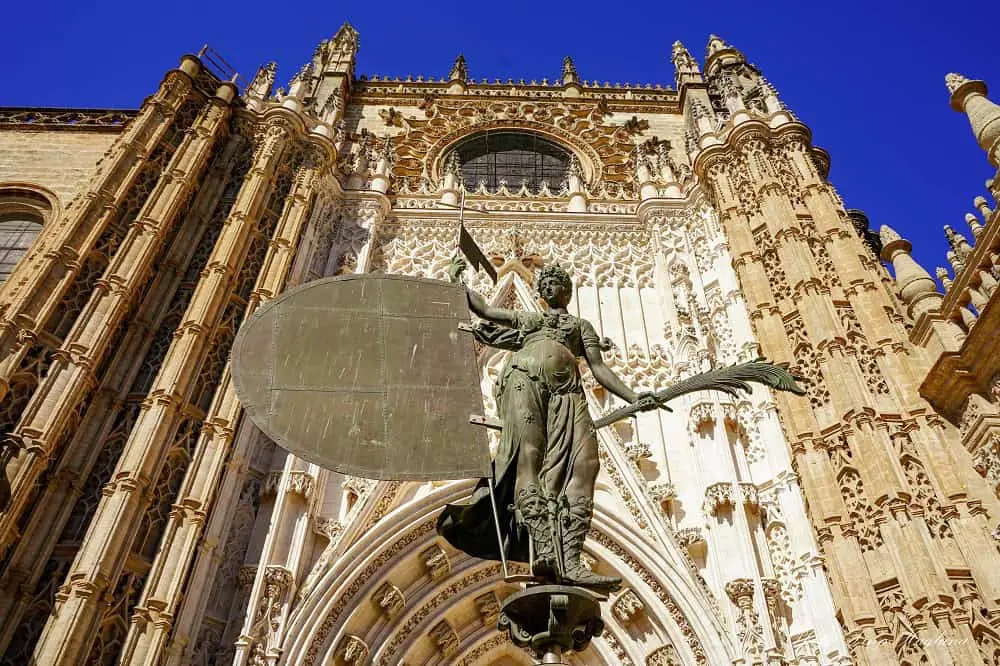
Built between 1401 and 1506, the astounding Gothic cathedral in Seville is one of the most famous landmarks in Spain.
It was built to demonstrate the wealth and power of the city in the same place where the 12th-century Almohad mosque used to be.
The cathedral’s real name is the Cathedral of Saint Mary of the Sea, and it was listed as a UNESCO World Heritage Site in 1987 together with the Real Alcazar and the Archivos de Indias.
The first thing you’ll come across when entering the cathedral is the tomb of Christopher Columbus, which is really nice, with the statues of four men holding the casket.
Though it has been unclear whether it’s really his remains that lie in Seville Cathedral, recent DNA tests have confirmed that it really is Christopher Columbus.
I recommend booking tickets in advance to avoid wasting precious time in extra queues and possibly not getting entry on the day and time you want. There’s a long enough queue waiting to enter with a ticket. You can read everything about booking tickets to Seville Cathedral here.
La Giralda
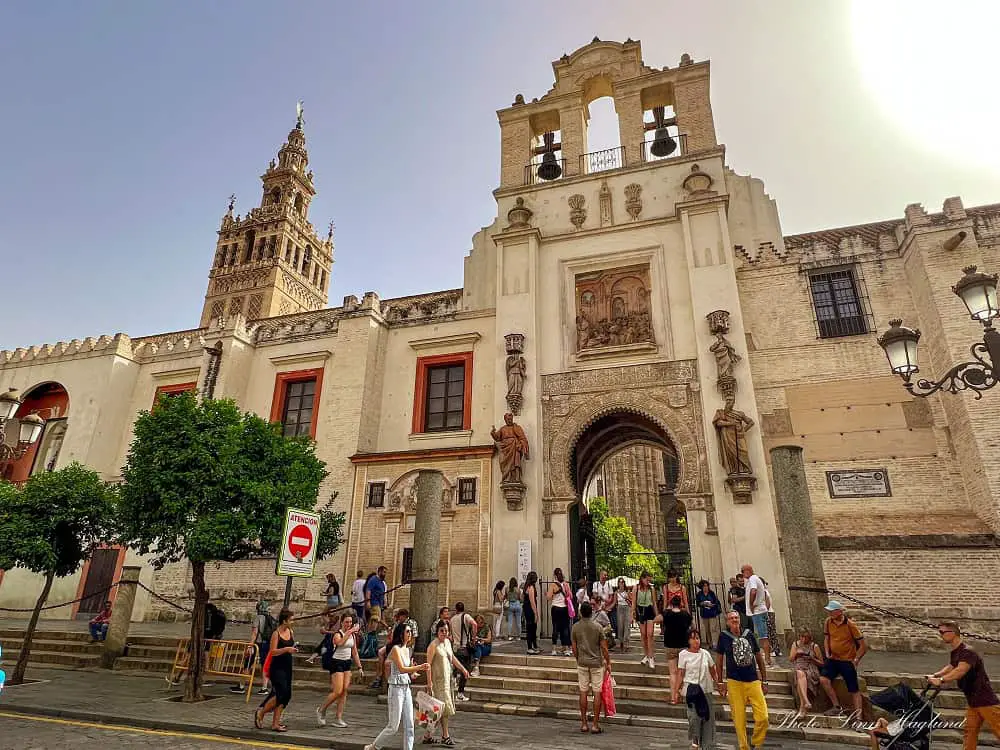
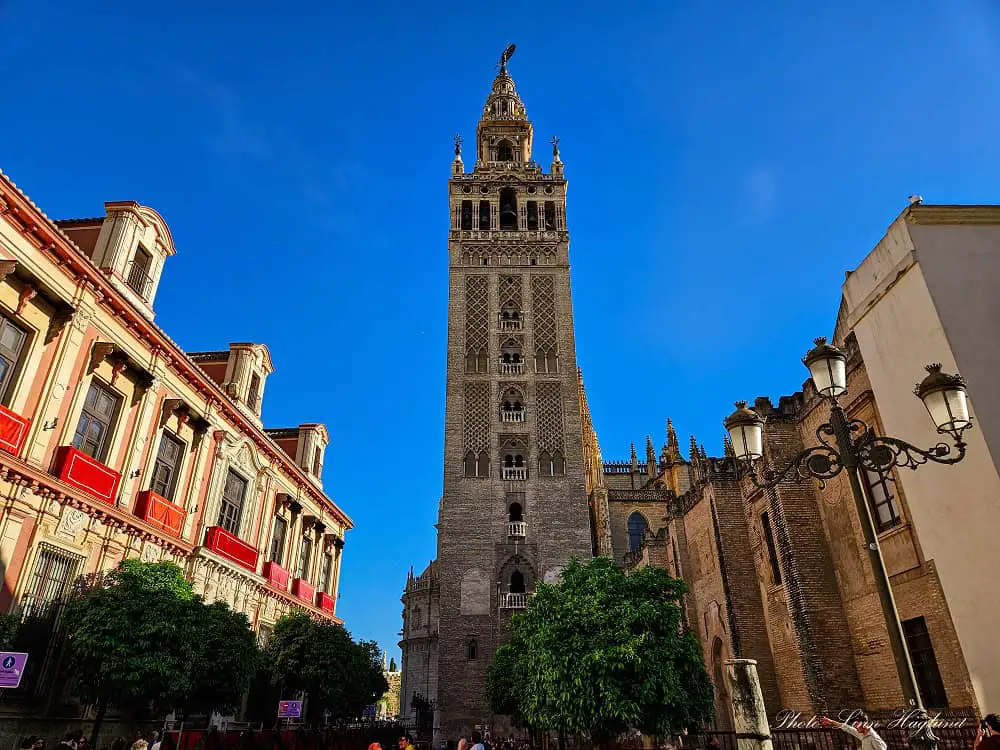
La Giralda is the bell tower of Seville Cathedral and a landmark the locals are truly proud of. It has its name from the weather vane on the tower, in Spanish known as the Giraldillo, which was the largest bronze statue of the European Renaissance.
During the extreme storms of winter 2026, a large part of the weather vane blew off and fell onto the square below. Luckily, noone got hurt, and when we visited shortly after, they were attaching it again, so the Giralda is back to its beautiful self.
The entrance to La Giralda is from inside the cathedral, so make sure you climb it before you exit the cathedral.
I recently climbed the Giralda Tower after many years, and in all honesty, I wasn’t very impressed. It was very crowded, so it didn’t seem like they had any limit on the number of people ascending at once.
Besides, the windows were covered in metal grids, which obstructed the visibility of the views.
As you likely already know, I’m not a big fan of overtouristed places, and though you can’t escape the crowds in a city like Seville, this was the only place I wouldn’t go again for a good while.
And on my last visit, I did all the touristy stuff in a timespan of a couple of weeks, as we filmed a YouTube video there.
Visit the Archivos de Indias
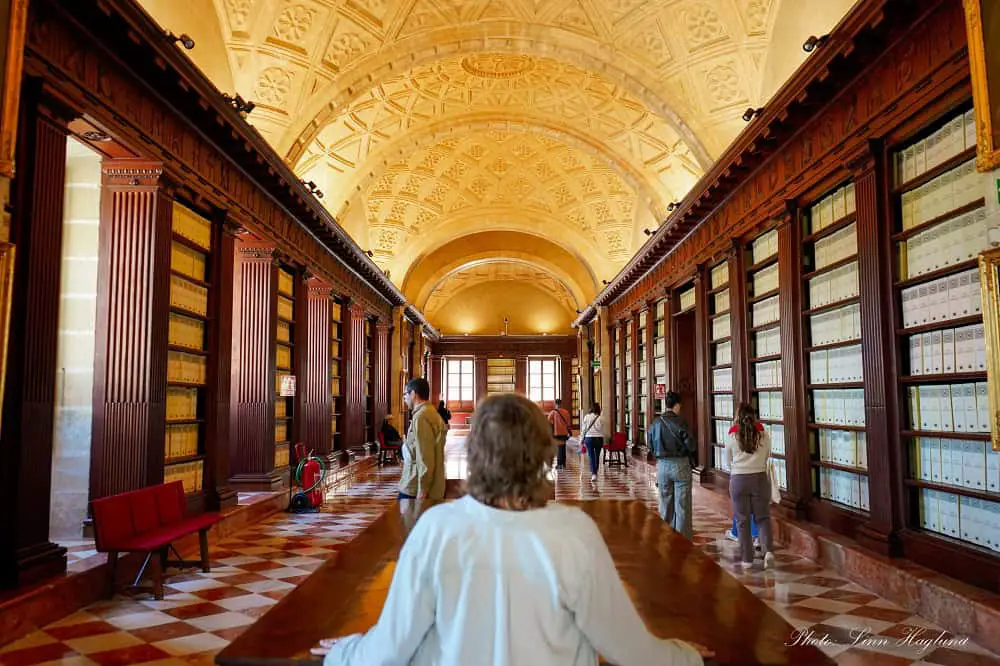
The Archivos de Indias is the UNESCO site in Seville that noone talks about. I highly recommend visiting. It’s located across the cathedral entrance, so you could visit it before the cathedral, too, if it fits your schedule better.
The archive holds the most significant documentation in the world of Spanish colonial times, with over 80 million pages of original documents.
At the bottom floor, they show you the “document of the month” so you can see an original document and learn what it says.
The Archivos de Indias is set in a beautiful building too; I especially love the staircase to the second floor, but the views of the cathedral through its windows are unmatched.
To learn more about the historical meaning, I highly recommend booking this guided tour.
Royal Alcázar of Seville
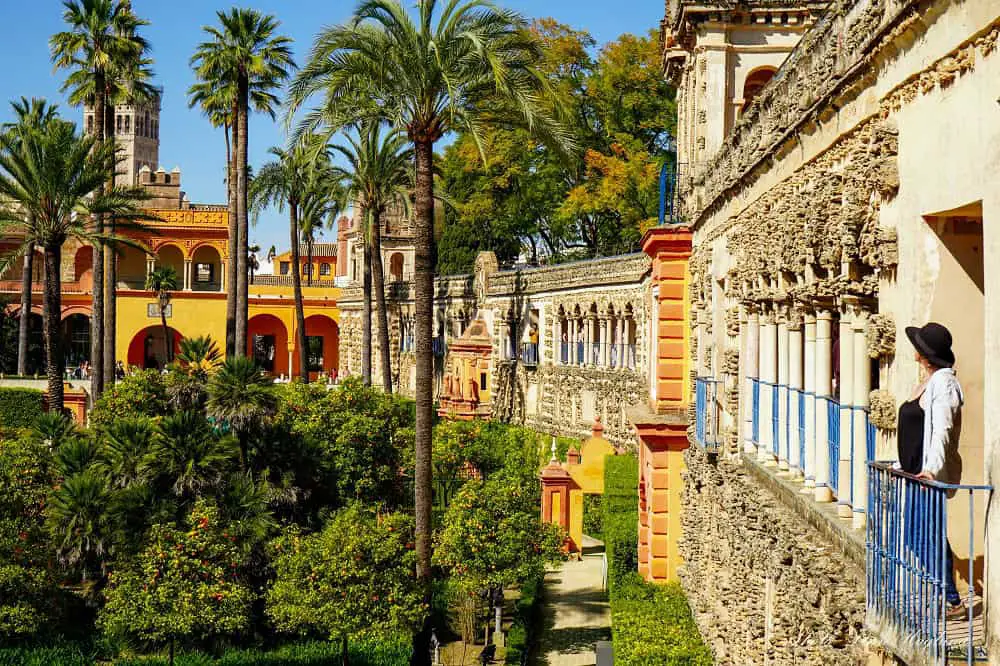
This staggering 11th-century Moorish royal palace is a must-see on your Seville 3-day itinerary. Another UNESCO World Heritage Site in the heart of the city, and the oldest palace in Europe that’s still in use.
There are endless halls, courtyards, and gardens with so much beautiful detail in styles differing between Mudejar, Gothic, Renaissance, Baroque, Muslim, and Romantic art.
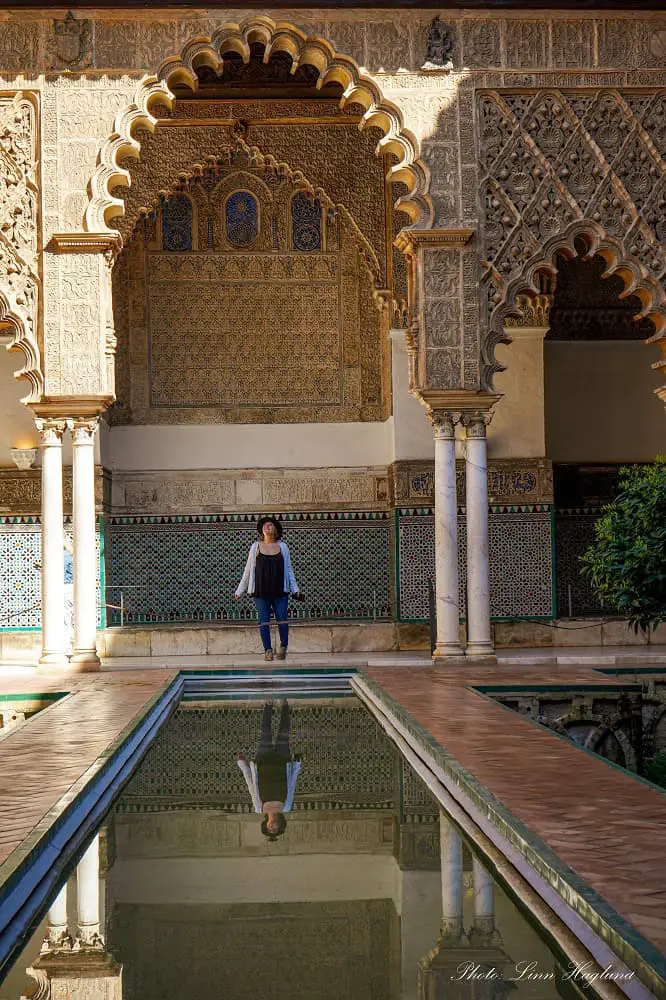
On my last visit, I spent 3.5 hours walking around, taking pictures, staring silently, and taking in the absolute beauty. I had two weeks in Seville, and I only visited the Real Alcazar that day. You probably need to hurry up a little more, but I’d expect to at least take 2 hours walking around the palace.
Reserve skip-the-line tickets here to plan your itinerary. The Real Alcazar sells out weeks in advance, so don’t wait until the last minute. If you want to learn more about the palace and its history, I highly recommend this guided tour.
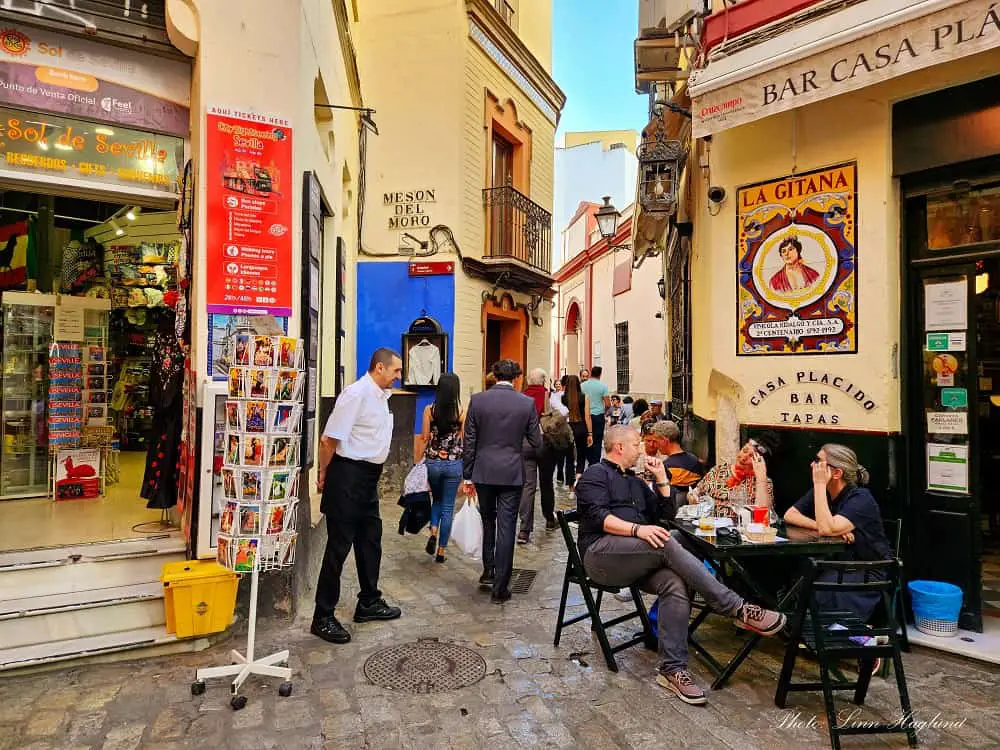
Stroll around the Santa Cruz neighborhood and have tapas
Santa Cruz is one of the cutest neighborhoods in Seville, situated just behind the cathedral, and it’s also one of the most touristy.
I still love walking around there, and there are plenty of good restaurants and tapas bars for lunch and dinner in this part of the city.
To walk off the food, spend an hour or two just getting lost in the narrow, cobblestoned streets in this charming part of the city.
It used to be the Old Jewish Quarter and is one of the oldest neighborhoods, which is now full of restaurants, cafés, boutique shops, handicraft stores, and Flamenco joints.
Day 2: Plaza de España, Parque Maria Luisa, and Guadalquivir cruise
After breakfast on day two, it’s time to head to my favorite place in Seville! I used to spend a lot of time there studying or people-watching, but I also spent a lot of time drinking Cruzcampo (Seville’s local beer) in the park. What is student life without drinking beers in the park anyway?
Plaza de España is one of the most visited attractions in Seville by both locals and tourists, and it’s completely free to visit!
Plaza de España
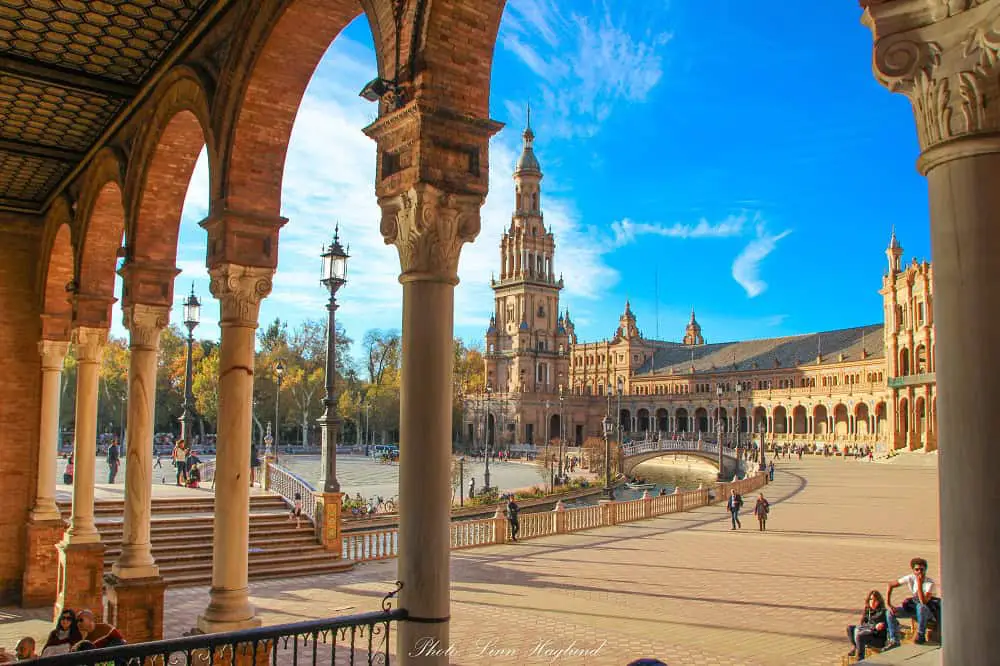
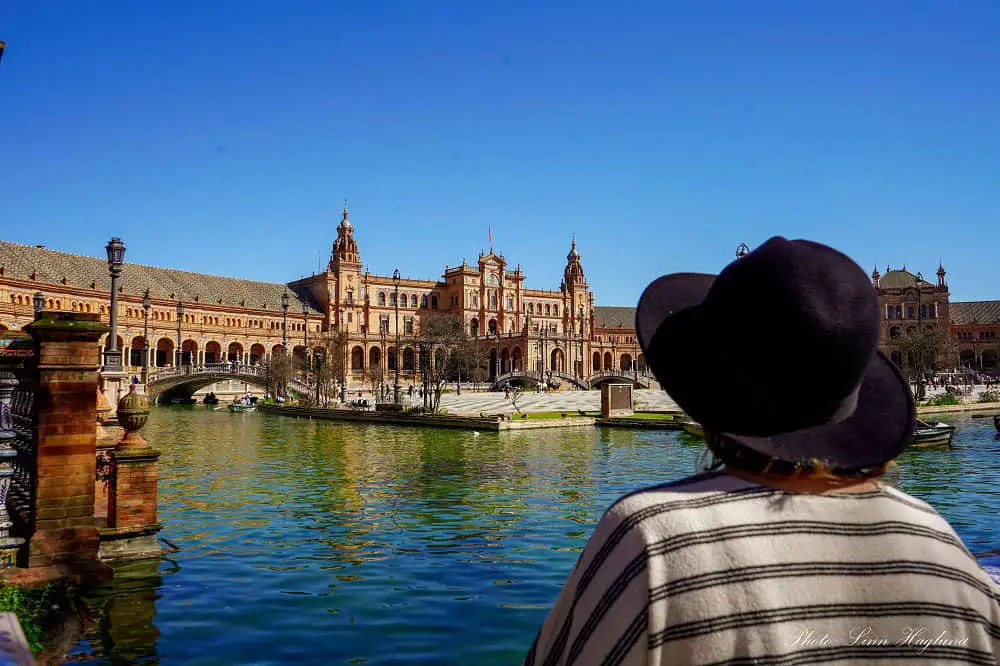
Plaza de España has become one of the city’s most iconic landmarks over the years and is truly a must-visit.
The mesmerizing half-circled structure is a wonderful mix of Moorish Revival style, Baroque Revival Style, and Renaissance Revival style. Built in 1928, it was made to impress during the Ibero-American Expo that took place in Parque Maria Louisa the year after.
It’s a surprisingly new attraction, not even 100 years old. Yet, it’s so full of history.
Each one of the 50 Spanish provinces have got their own tile bench along the half-circle where locals sit and chill, and tourists take their Insta shots.
A 500-meter canal offering rowboat trips for tourists has given Plaza de España the nickname “the Venice of Seville”.
The canal can be crossed on beautifully tiled bridges, and you can enter the building to get views from above.
The square has been a filming location for famous movies, like Star Wars.
Besides being a top tourist attraction, it’s also where Seville Town Hall has its offices, so oddly enough, this is where I went back in 2005 to get my first residency card in Spain.
Parque Maria Louisa
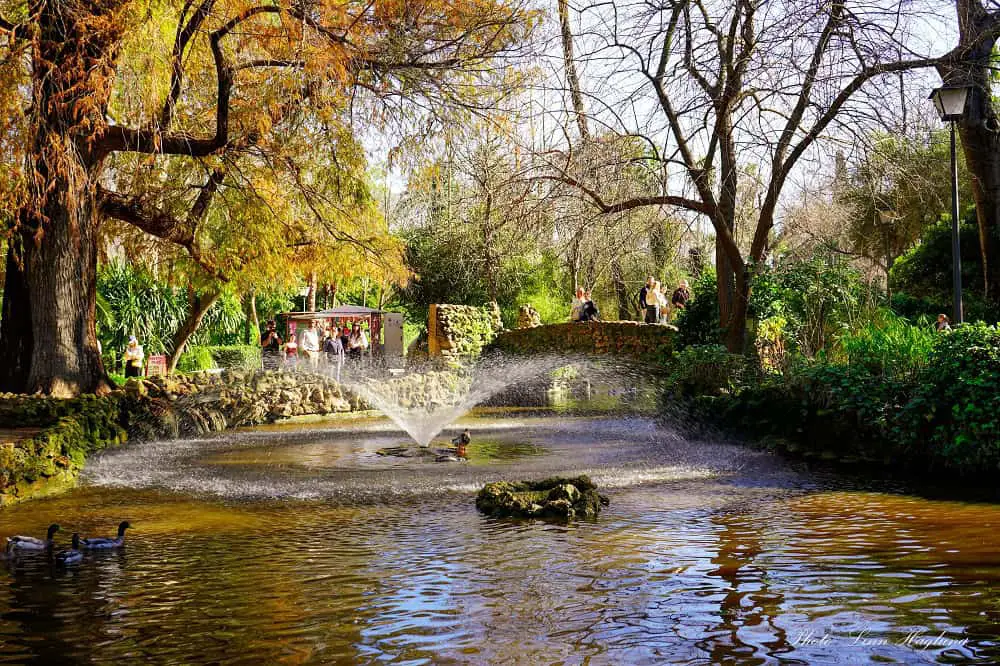
Parque Maria Louisa is the biggest and, in my opinion, the most beautiful park in Seville. With its 34 hectares of greenery stretching along the Guadalquivir river, it closes up against Plaza de España on one side.
The marvelous gardens are packed with exotic plants, old trees, refreshing Moorish-style fountains, and sculptures. It used to be the private gardens of the Palace of San Telmo, but was donated to the city and opened to the public in 1914.
You can gladly get lost in the park for hours, admiring the amazing and detailed artwork throughout the park.
Torre del Oro
You might want to grab some lunch before visiting Torre del Oro. There are many restaurants along the river and in the streets towards the center.
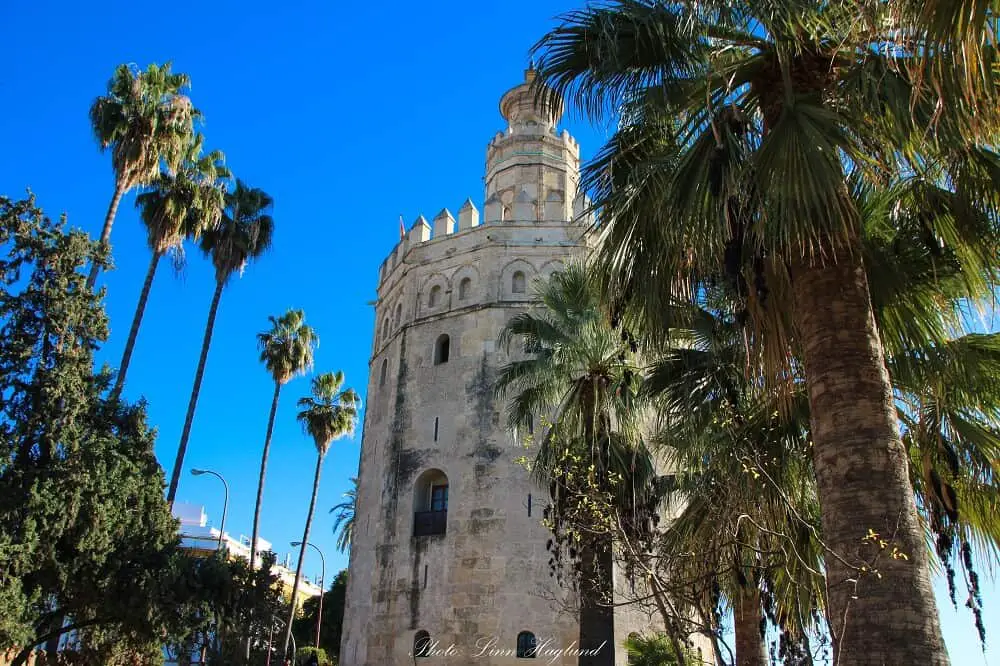
Torre del Oro sits on the riverbank of the Guadalquivir, a former defensive tower built by the Moors. It’s located next to where the river cruises start.
It’s said that the 36-meter-tall tower had a thick chain hanging from it across the river to another tower to cut off the river access for the enemy.
The tower served as a prison, a chapel, and a gunpowder store, among other things, before it was declared a historic-artistic monument in 1931.
Today, Torre del Oro is home to Seville’s Naval Museum, and you can see the views from the top.
Entrance: Voluntary donation
Opening hours: Monday to Friday: 09:00-18:45, Saturday-Sunday: 10:30-18:45, Closed on Bank Holidays.
Take a boat trip on the Guadalquivir River
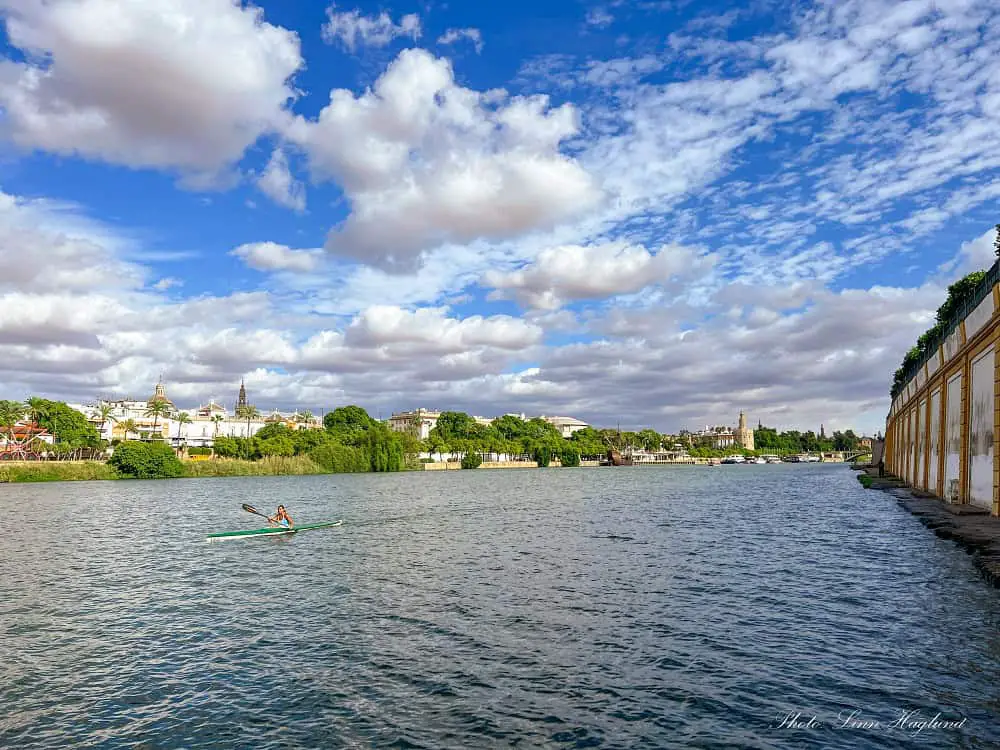
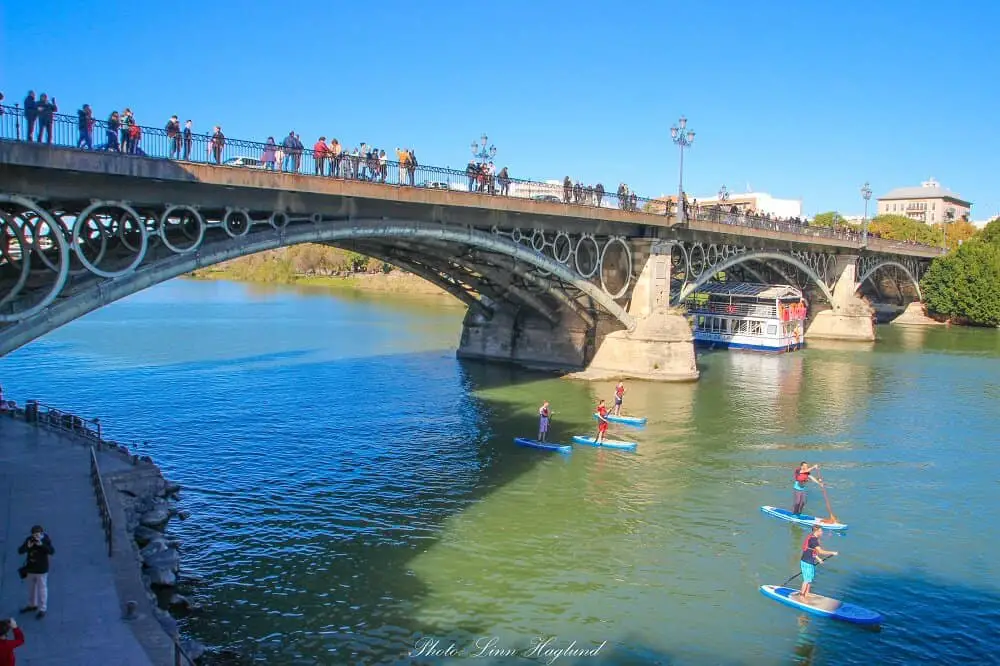
As the only navigable river in Spain, the Guadalquivir River, which divides the city of Seville, has a rich history of defenses and conquests. The 657-kilometer-long river crosses all of Andalusia.
The boardwalk along the river is busily used by locals walking or cycling. Go for a stroll before taking this boat cruise along the river to see the city from a different perspective.
If you’re up for spicing up your 3-day Seville itinerary, I highly recommend this kayak tour on the river.
Read my top picks for water activities and boat tours in Seville.
Flamenco show
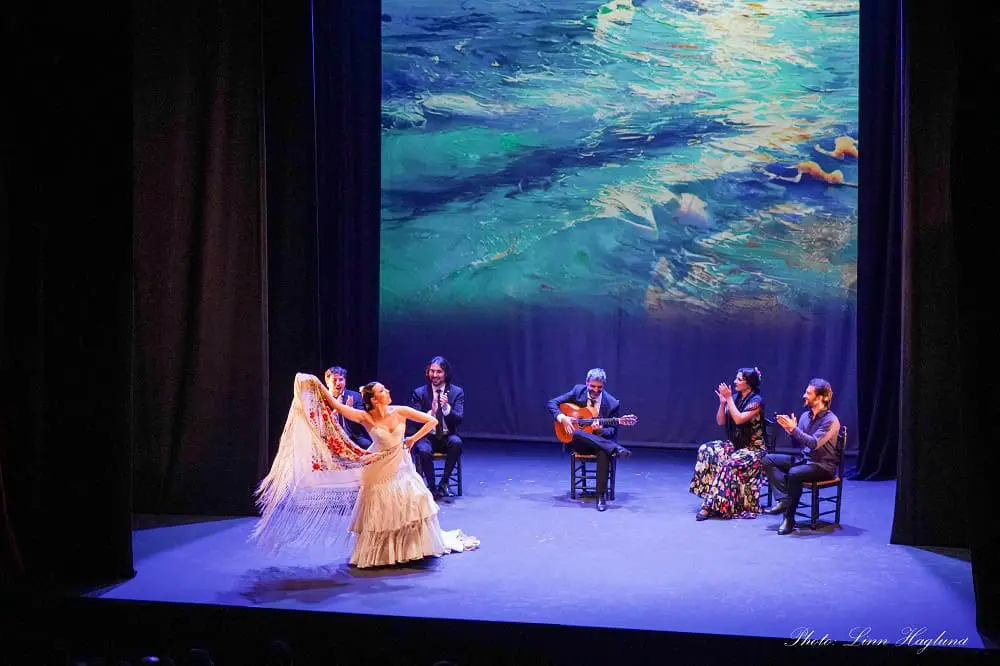
As one of the leading cities in Flamenco, there is no way you can spend 3 days in Seville without experiencing at least one Flamenco show.
End the day with an astounding flamenco show at Casa de la Memoria (pre-book your tickets here) or, for a more intimate experience, head to Los Gallos in Santa Cruz.
I also went on this show in Teatro Flamenco Sevilla on my last visit, which was a first, and we both really enjoyed it. This was different and more theatrical in a way compared to the other flamenco shows I’ve been to.
Day 3: Las Setas de Sevilla, Palacio de las Dueñas, and Alfalfa
After breakfast, it’s time to explore what, in my opinion, are the best views of Seville and some of the city’s lesser-visited attractions.
Las Setas de Sevilla
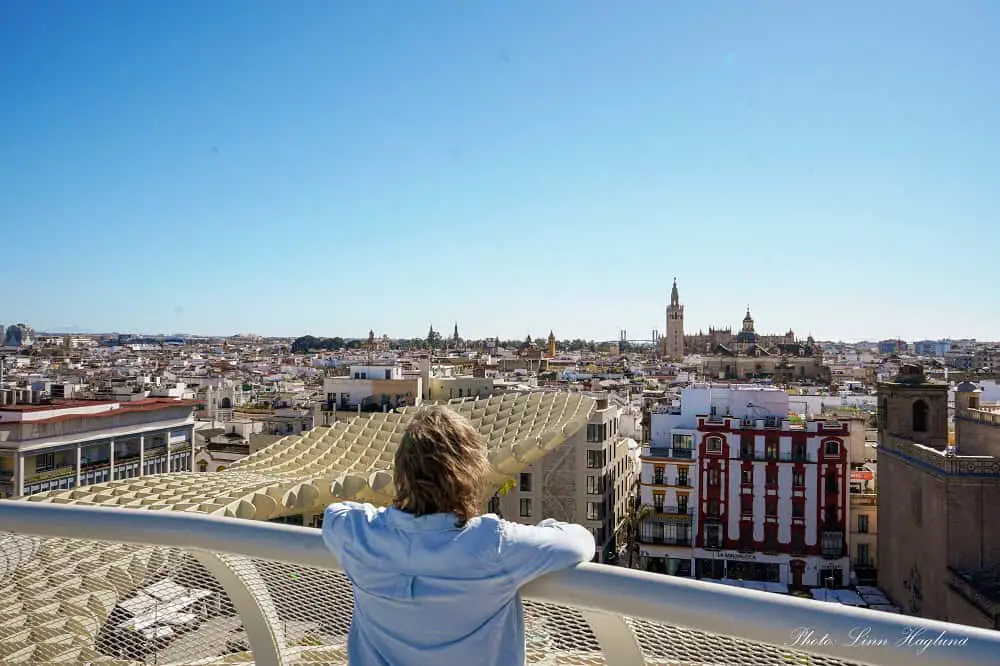
Las Setas de Sevilla, called Metropool Parasol in English, is a wooden, modern building resembling a mushroom (setas meaning mushrooms in Spanish). Built in 2011 in an old quarter in the city, on Plaza de la Encarnación, it’s the most hated building among locals.
To be honest, I have to agree with them. It’s a structure that doesn’t go with the rest of the city. Nevertheless, it has turned into one of Seville’s major tourist attractions in the few years it’s been there.
It’s the largest wooden building in the world, and while I haven’t been exactly pro-Las Setas over the years, I did get my sh*t together and visited it on my last visit to Seville.
The views of the city from the top are fantastic, and I love that you can see the cathedral towering over the skyline. I hate to admit it, but Setas de Seville offer the BEST views in Seville. There you go. I said it.
SEE THE REST OF THE PROVINCE…
⭐Things to do in Osuna
⭐Things to do in Carmona
Palacio de las Dueñas
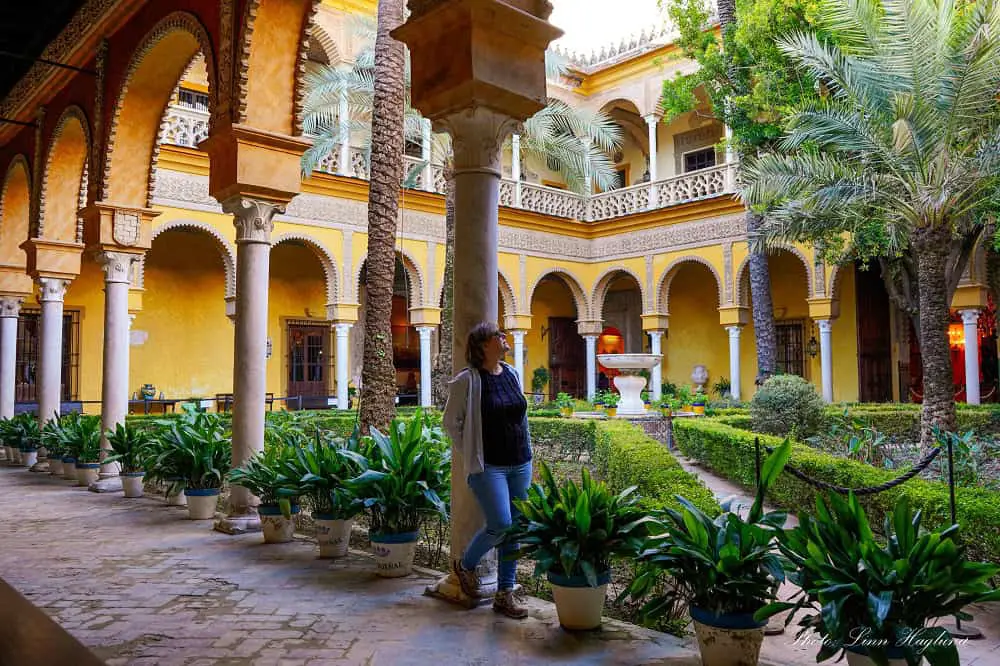
Palacio de las Dueñas is a beautiful 15th-century ducal palace, which is still inhabited to this day. It first opened its doors to the public in 2016, and I’m so glad they did!
It’s a refreshing place to explore after spending time in the busier tourist attractions in Seville. There are fewer people, and you can really take in the magnificent architecture, which is a delightful mix of Moorish, Renaissance, and Gothic styles with exquisite gardens.
Have tapas in the Alfalfa neighborhood
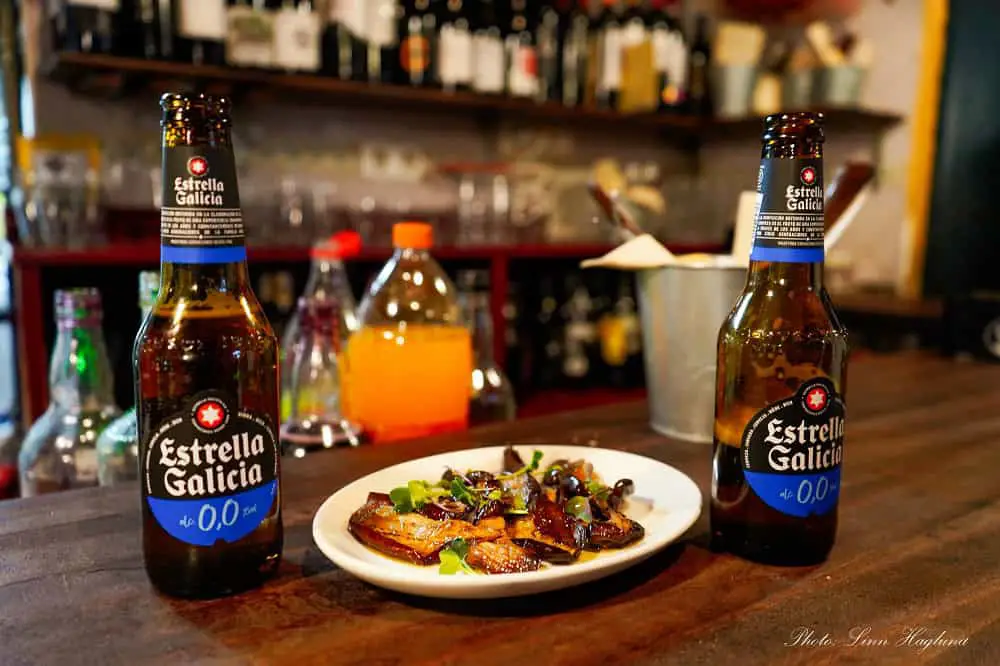
After visiting these sites, I suggest walking around the quaint Alfalfa neighborhood. This area is jam-packed with bars and restaurants, and the perfect place to stroll around and try local tapas in different places.
While it used to feel quite local back in the day, it has turned into a popular tourist area. And I understand why. The neighborhood is renowned for its amazing tapas bars and good quality food, so I guess it was only a matter of time before the word spread.
I’ve been going there regularly for tapas and drinks for the last 20+ years, and though the clientele has changed over the years, the food quality is still just as good as when it was mostly locals roaming the bars, even places like Bar Alfalfa.
How to get to Seville
Seville has its own international airport, and since it was ranked the top city to visit by Lonely Planet in 2018, tourism numbers have exploded, and the airport has drastically increased its commuting destinations. It’s easy to get from Seville Airport to the city center by bus or by booking an Airport transfer.
With this, you’ll probably already get an idea that Seville is easy to get to by air. But you can easily reach the city by train, bus, or car.
Bus to Seville
If you want to travel by bus to Seville, the city is well-connected with all the Andalusian cities as well as larger cities like Madrid, Valencia, and Barcelona.
You can also travel by bus to Seville from the neighboring country, Portugal, which has destinations much closer to Seville than Barcelona and Valencia. It’s only a 3-hour and 30-minute journey from Faro in southern Portugal. From Lisbon, it’s a 7-hour trip.
The main bus station in Seville is Estación de Autobuses Plaza de Armas.
Train to Seville
It is easy to travel by train to Seville from all major cities with train connections in the country, like Malaga, Cordoba, Granada, Jerez de la Frontera, and Cadiz.
There is even a speed train between Madrid and Seville, which only takes 2 hours and 30 minutes.
The main train station in Seville is Santa Justa.
Car to Seville
If you travel by car to explore Seville for 3 days, you’ll want to check upfront that your hotel has free private parking included. The city can be a pain to navigate, especially during rush hours.
It’s not a huge city like Barcelona, but the GPS can be confusing, as there are a lot of weird turns, and if you miss them, you might have to continue far before you can turn around again. I’m talking from experience, and I know the city well!
There’s a ring road around the city, so if your hotel is on the other side of the city, it’s much better to continue on the ring road than to drive through the city center.
Otherwise, the roads in Spain are usually well-maintained and the motorways to get into Seville from all parts are in good condition. Just be aware of speed cameras. They are all signposted, so you just need to be alert when you drive.
Parking in Seville can be a hassle, though it is possible if you know where to go. I’ve written a thorough guide to free parking spots in Seville that you can read here.
TOP TIP!
Book your rental car in good time before your trip to ensure the best prices.
Check prices and models available here.
Best time to visit Seville 3 days
Seville is an inland city, and the whole province has no coastline at all. It is definitely not a summer city as temperatures rise to become some of the highest in the whole country between mid-June and mid-September.
The rest of the year, though, is perfect to visit Seville for 3 days or longer. For temperatures that allow a light dress or shorts and a t-shirt, the best months are mid-April to mid-June or mid-September to October.
The winter months can offer 15-20 degrees Celsius in the daytime but become chilly at night with temperatures close to 2-3 degrees Celsius.
In winter, you should bring a warm jacket, though you’ll notice that the locals dress up as if it were the North Pole, even in the daytime. And there are usually a couple of weeks during the winter that truly feel like the North Pole, it’s just not easy to know when.
The winter months are beautiful as the orange trees in every street are dotted with bright orange balls. They are not to eat, though! These oranges taste really bitter and are used to make jam.
In the spring, you can enjoy the sweet scent of purple flowers covering the trees, especially around the Plaza de España area.
Where to stay in Seville
Hard to choose where to stay in Seville? Here are a few great places to choose from in different price ranges.
If you want to read more about the different neighborhoods and what area I recommend in Seville for different types of travelers, check out my complete neighborhood guide here.
MY TOP HOTEL PICKS FOR EVERY BUDGET:
LUXURY: Hotel Alfonso XIII – stay like a king and queen at the most luxurious hotel in Seville with an Andalusian courtyard and pool right next to the Real Alcazar.
MID-RANGE: Hotel Amadeus Sevilla – Centrally located in the old town, close to top attractions with a pool.
BUDGET: Un Patio al Sur – A lovely hotel in a quiet street in the historic center with a charming rooftop terrace.
HOSTEL: New Samay Hostel – A welcoming hostel with nice common areas and a rooftop with city views.
If you happen to be there at the right time…
Andalusia is known for its huge fiestas and as the capital of Andalusia, there is no surprise Seville hosts some of the most epic fiestas in the country. And the best is that they are among the free things to do in Seville.
Semana Santa – Spain’s Holy Week
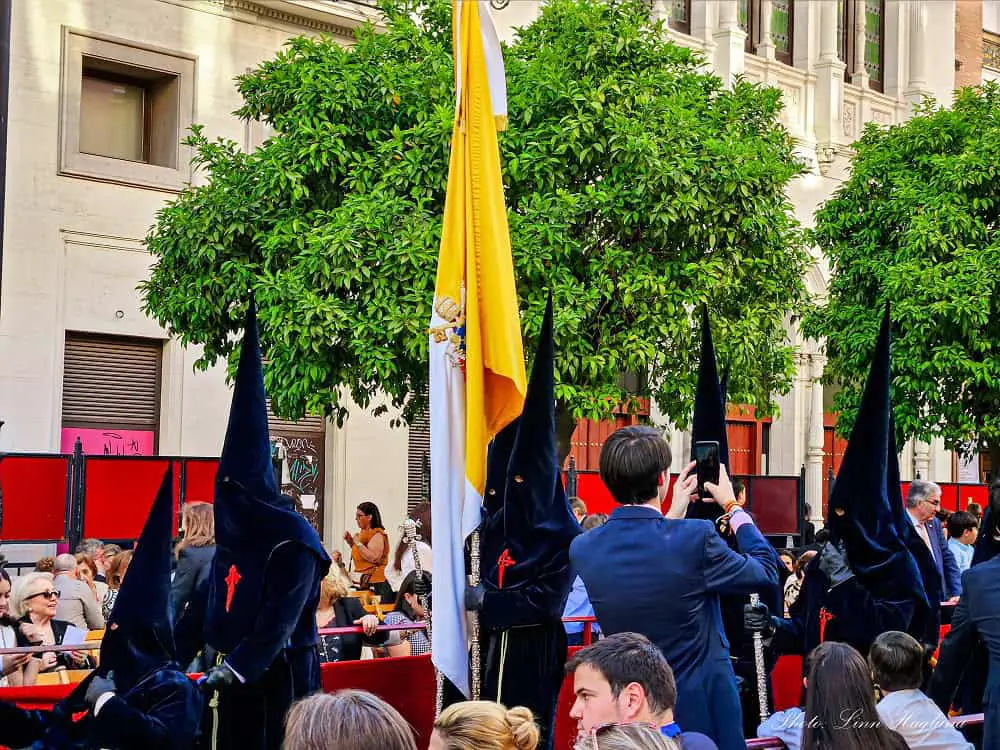
If you happen to go to Seville during Easter week, you will witness the biggest celebration of “Semana Santa” in the whole country. The streets will be packed, so other sightseeing will be difficult, as huge processions fill the streets day and night.
Those walking in the processions dress in full dresses with pointy hats covering their face. These guys are called Nazarenos.
Floats with massive saint statues carried by men and buckets of sweets are thrown to eager children in the masses watching the massive parades, which are accompanied by straight-out depressive music.
During the night parades, children bring balls of aluminum wrap and sing a funny verse to the Nazarenos, which in turn drip wax from their candles onto the aluminum balls.
Kids are happily competing in who gets the biggest and most colorful wax ball, and often save them for the next years so they can grow them even bigger.
Feria de Abril
Two weeks after Semana Santa, the famous Feria de Abril takes place. All cities, towns, and villages, no matter how small, have their own Feria in Andalusia, and Seville’s Feria is massive, nonetheless distinctive from others.
The traditional Feria de Abril is a week filled with parties. There is a dedicated area where companies and private persons set up “party tents”, called Casetas, decorated with colorful Andalusian decor and selling drinks and often tapas.
Women and girls all dress up in their Flamenco dresses, and everyone dances Sevillanas, a traditional dance that surprisingly doesn’t originate from Seville, but from Castile.
There is also a huge fairground set up each year for children and adults alike, including food and sweet stalls.
The main entrance to the Feria ground is a huge lit-up portal, which the whole city comes to watch when they light at midnight on the opening night of the Feria. They design a new portal each year.
The difference between the Feria in Seville and other ferias is that most of the Casetas are privately owned and are only accessible by invitation.
This means that unless you actually have friends in Seville who have friends, family, or happen to work for a company that has a Caseta, you won’t be able to access any of the private ones.
Luckily, there are a few public Casetas that you can enjoy, so if you happen to be in the city at this time, go check it out and party like a local!
However, be aware that during the week of Feria, most of the city stops. Shops and bars close because they are partying all week, so you can’t expect to see the city as you normally would. On the other hand, you’ll get a unique experience of a lifetime!
Reyes
Reyes is the Spanish Christmas celebration of the three kings bringing presents for the baby Jesus. If you happen to be in Seville on the 5th and the 6th of January, be prepared for massive parades throughout the city. Massive floats are carried with the three kings throwing sweets to eager kids on the sidelines.
This is the day the locals have big meals at home with their families and exchange presents.
The 6th of January is the actual day of Reyes and a Bank Holiday, so basically everything is closed. Worth noticing is that the Spanish are so in love with their Fiestas that if one of them happens to be on a Sunday, they move their day off to Monday. So if Reyes is on a Sunday, everything will be closed on the Monday after.
However, the day after Reyes, the January sales begin, so if you’re up for some shopping, this is the time to go!
WHERE ARE YOU HEADING NEXT?
⭐Towns and cities near Seville worth visiting
⭐Top things to do in Cadiz
⭐Wonderful things to do in Huelva
⭐Things to do in Conil de la Frontera
⭐Things to do in Jerez de la Frontera
⭐One day Malaga itinerary
⭐Things to do in Jaen
Summing up Seville in 3 days
Summing up, spending 3 days in Seville is a great way to get a good introduction to the city and not to mention Andalucia.
What I love about Seville is that the city has maintained its traditions and local feel even after turning into one of the most touristy cities in Spain.
Happy travels!