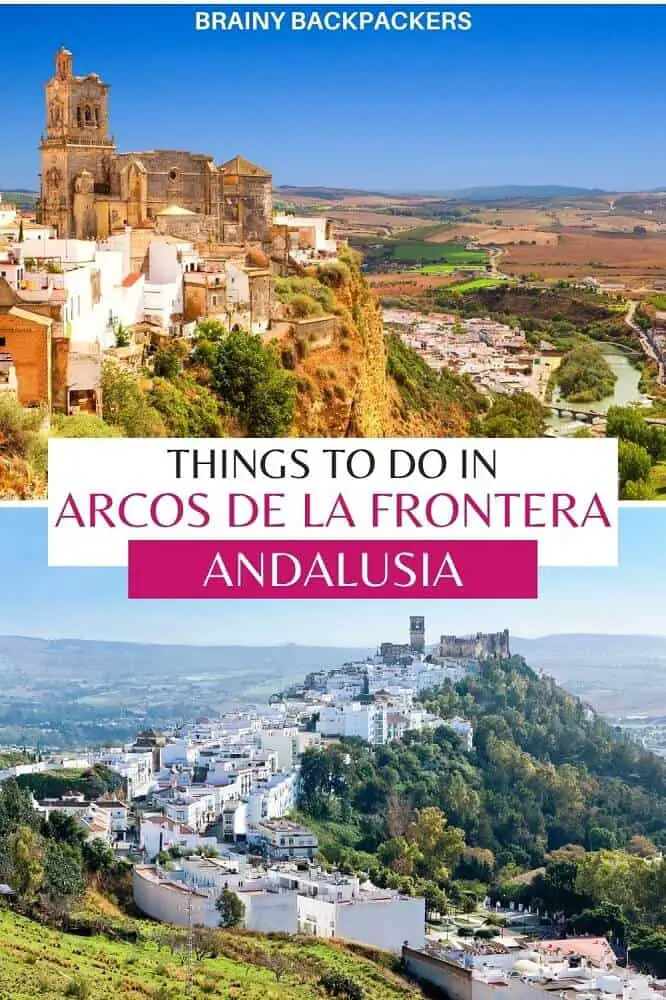
You’re looking for a picturesque white village between Seville and Cadiz? Look no further than Arcos de la Frontera! This charming clifftop village is one of the most beautiful white villages you’ll visit
The little white village sits on the top of a dramatic cliff, looking down 150 meters vertically. There are enough things to do in Arcos de la Frontera to fill the day, but if you want to connect a bit more with the friendly locals and really experience the village life, you should definitely stay a couple of nights.
Arcos de la Frontera is definitely a lesser-visited Spanish village and deserves a lot more attention. Read on for everything you need to know before you go, including what to do and where to stay.
Disclosure: This post may contain affiliate links. That means that if you make a purchase through one of those links, I will get a small commission at no extra cost to you.
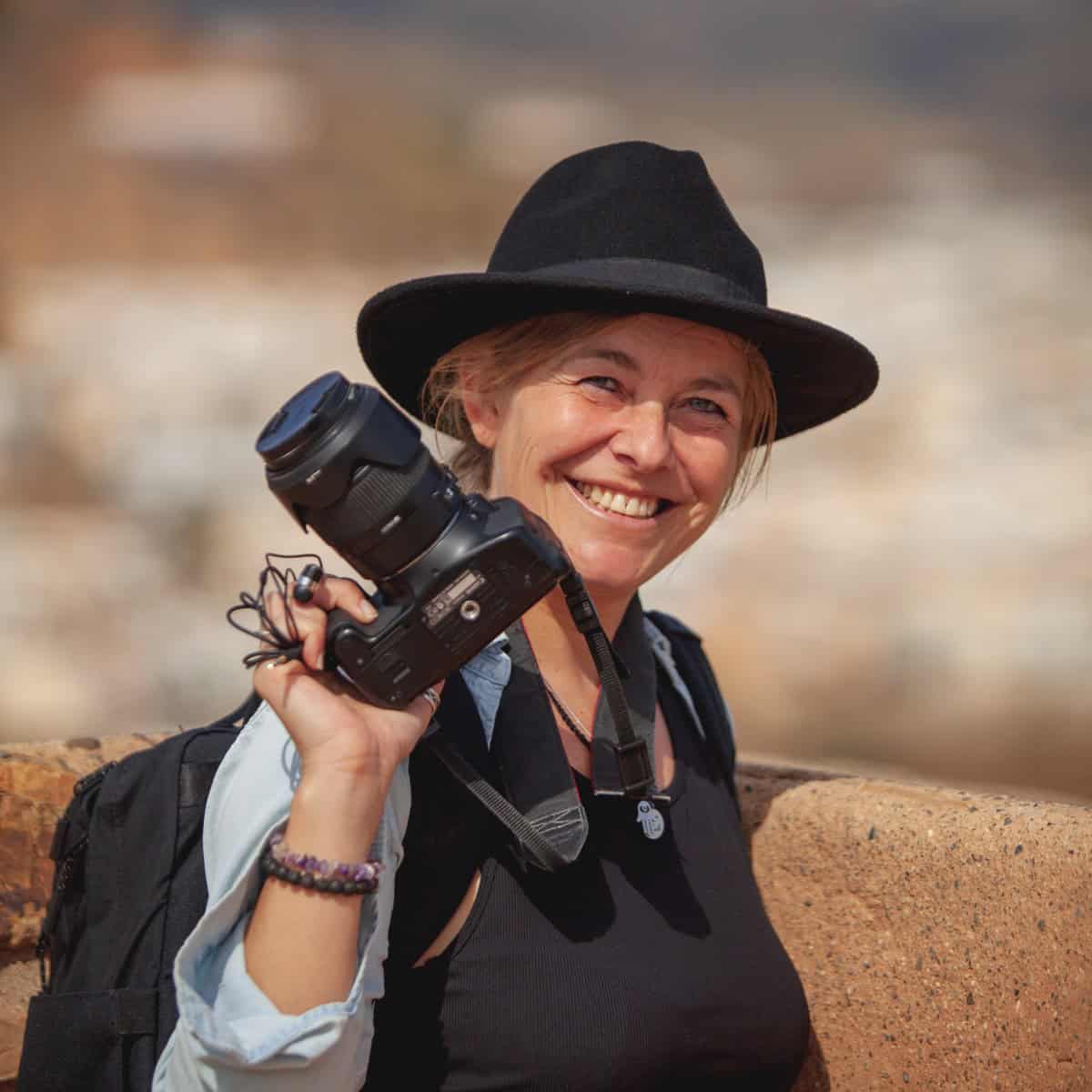
Hi, I’m Linn Haglund, the face behind Brainy Backpackers. I’ve been based in Spain for the last 10+ years, and travel locally and abroad whenever I have a chance. I’m passionate about responsible travel, slow and off the beaten path travel, and outdoor activities, especially hiking. I’m currently slow traveling in my van Persistence (Persi among friends) with my fiancée Mohammed and rescue puppy Atlas. I’m excited to help you explore this planet responsibly!
PIN IT FOR LATER!

🙋JOIN OUR THRIVING FACEBOOK COMMUNITY FOR ANDALUCIA TRAVEL TIPS AND INSPIRATION!
Things to do in Arcos de la Frontera
There are quite a few things to see and do in Arcos de la Frontera, though the village is small. It’s also good to be prepared for steep hills, and there will be a fair bit of walking.
I love the hills and narrow winding roads between the whitewashed houses with the random view through hairline alleyways and arches. Arcos de la Frontera makes the perfect day trip from Seville or Cadiz.
Visit the Minor Basilica of Santa María de la Asunción
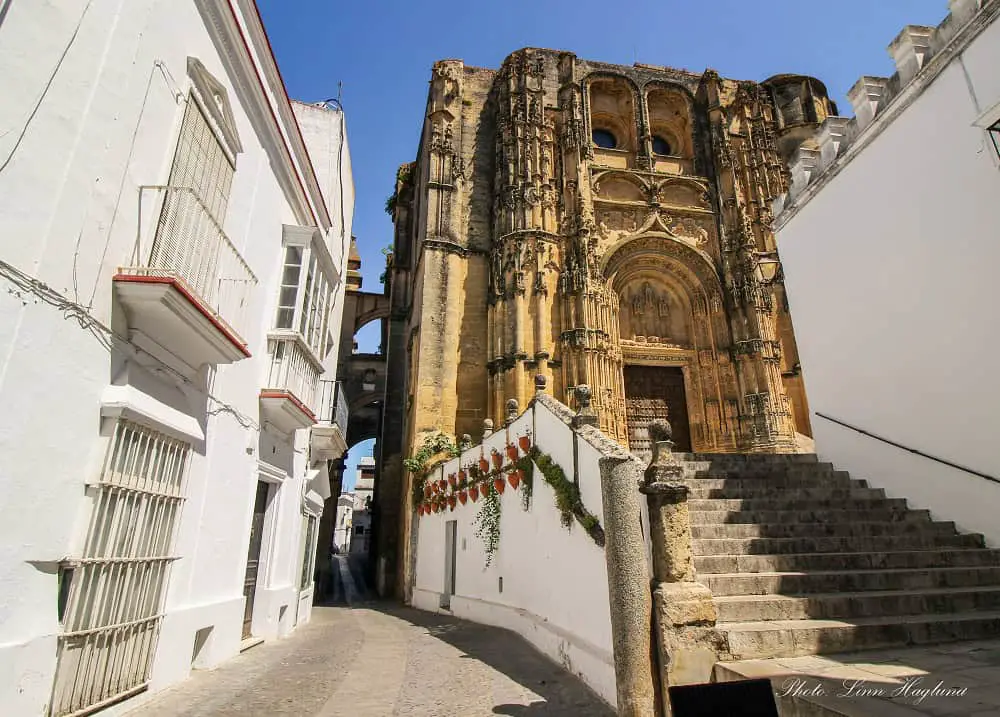
Minor Basilica of Santa María de la Asunción is my favorite attraction in Arcos de la Frontera. It’s incredibly beautiful, and it’s also the natural starting point for any walking tour of the village.
This astounding church was built on top of an Arab mosque between the 14th and 18th centuries with Gothic, Mudejar, Renaissance, Plateresque, and Baroque features. Especially the entrance is incredibly fascinating.
In 1931, the Minor Basilica of Santa María de la Asunción was declared a National Monument.
Besides exploring the interior (both the altar and the choir are spectacular!), I highly recommend climbing the steps to the top of the bell tower for sweeping views of Arcos from above.
Just by witnessing this impressive site, there’s no doubt that Arcos is one of the most charming villages near Seville.

Take in the views from Plaza del Cabildo viewpoint
On Plaza del Cabildo, opposite the Minor Basilica of Santa María de la Asunción, you find the viewpoint of Plaza del Cabildo with astounding views of the surrounding countryside, which is divided by the Guadalete River.
Beyond, you’ll see the mountains Sierra de Dos Hermanas and Sierra de la Sal. This is without a doubt the most accessible viewpoint in Arcos de la Frontera, but it’s also my favorite view.
I love the river which lines the foot of the mountain the village is set on and the patchwork of trees and farmland that changes colors with the seasons, and the mountains in the far end.

Take a tour of the Town Hall
The Town Hall is located on Plaza de Cabildo next to the viewpoint. The entrance is majestically crowned with the town’s patron saint, Archangel San Miguel.
You can find the tourist office here today, where you can book tours of the astounding Town Hall, which has been located here since 1634. There are also some exhibitions inside worth seeing.

Admire the Ducal Castle
The Ducal Castle is located on Plaza del Cabildo, next to the Town Hall. It dates back to before the 11th century and was used as a fortress by the Moors.
Later, it became the residence of the Dukes of Arcos de la Frontera and is still in private ownership, so it’s not possible to visit for tourists.
That said, I recommend going in the arch next to the Town Hall, and you can walk into a backyard where you can see a medieval entrance and facade of the castle, which is pretty cool!

Grab a drink outside the Convent of the Barefoot Mercedarian Order
The Convent of the Barefoot Mercedarian Order is located on the Plazuela de la Botica. Founded in 1642, this is the only convent in Arcos de la Frontera that is still used as a cloister. The convent houses an image of San Miguel, the patron saint of Arcos.
You can’t normally visit the cloister, as it’s in use, but you can purchase freshly baked goods from the nuns through a window by the entrance.
Outside the convent, there’s a bar where you can enjoy tapas and a cold drink on the outside terrace. It’s super refreshing on a hot day, as you get the shade from the buildings.

Mercado de Abasto del Centro
The Mercado de Abasto del Centro in Arcos de la Frontera is located in an 18th-century church that the Jesuits started building before they were forced to abandon it.
The religious house was never finished, and now you can instead enjoy a vivid food market there every morning. I’ve never been lucky enough to go when it’s open, but friends who’ve been several times really love it!

Olivares Veas Theater
Olivares Veas Theater is one of the most unique places to visit in Arcos. It was started to be built in 1910 and has undergone numerous renovations since then.
The latest renovations took place at the beginning of the 1990s and were finished in 1994, so it’s still in fairly good shape.
Now it’s one of the top places in Arcos de la Frontera for cultural experiences.

Walk through the white arch to Abades Viewpoint
Abades Viewpoint is another stunning spot in Arcos de la Frontera, reached by a narrow alley and entering through a beautiful, white arch, which is also the village’s “kissing corner”.
At the viewpoint you’ll be treated to sweeping views of the surrounding countryside and also the lower part of the village, which is beyond beautiful. You can also see a turquoise lake behind the tiles and rooftop terraces.

San Agustín Church
San Agustín Church was first a convent in the 16th century before it became a monastery. In the 19th century, it was abandoned, though the Jesus statue in the church is still taken on processions during Easter Week, which is a very unique time of the year to visit.

How to get to Arcos de la Frontera Spain
Arcos de la Frontera is situated between Seville and Cadiz, though public transport isn’t necessarily the easiest way to get there.
If you travel from Málaga, I recommend going by car. It’s easy to park along the road on the outskirts of the historic part of the village.
Seville to Arcos de la Frontera
Getting from Seville to Arcos de la Frontera is easiest by car. It is only a 1 hour and 10 minutes drive and the perfect day trip from Seville.
If you don’t drive, there are buses to Jerez de la Frontera, so coming from Seville, you’ll have to change buses there to continue to Arcos de la Frontera.
The journey starts at around 2 hours, but can take a lot longer if the connecting buses don’t match your arrival time in Jerez.
Find buses from Seville to Jerez here, the buses from Jerez to Arcos are with local bus M-953.
Alternatively, you can look for ride shares at BlaBlaCar, which I have always had great experiences with, both as a passenger and a driver.

Cadiz to Arcos de la Frontera
Arcos de la Frontera is close to Cadiz, and it only takes about 40 minutes to drive. It’s usually easy to find parking outside the old town and walk the rest.
Getting from Cadiz to Arcos de la Frontera by bus takes around one hour with the local bus M-950.
Alternatively, you can look for ride shares at BlaBlaCar, which I have always had great experiences with, both as a passenger and a driver.

Where to stay in Arcos de la Frontera
There are a few places to stay in Arcos de la Frontera, but I highly recommend the Parador de Arcos de la Frontera.
A parador is a historical building that has been transformed into a luxury accommodation. Typically, paradores are converted castles, monasteries, or palaces.
The Parador de Arcos de la Frontera is located in the Casa del Corregidor, which is the former residence of the royal magistrate and mayor combined.
Responsible tourism in Arcos de la Frontera
Avoid animal tourism
First of all, Arcos de la Frontera is home to an active bullring where they have bullfights regularly. As a responsible traveler, make sure you don’t attend any events or even buy tickets to see the bullring as a tourist, as the money goes to fund more bullfights and animal cruelty.
Besides the bullring, I’ve seen a couple of elderly men keeping birds of prey by the Plaza del Cabildo viewpoint opposite the Minor Basilica of Santa María de la Asunción.
While I haven’t talked to them, it seems like they let tourists hold the birds and take pictures of them.
It is highly unethical to keep these birds captured, unable to fly in this way, so please don’t support their business.

Respect the locals
In such a small village as Arcos de la Frontera, it’s important to be respectful and act as a visitor. You might be experiencing that bars aren’t open or don’t serve food all day as they do in more touristy places.
Instead, inform yourself of when you should go and eat so you don’t get Hangry (can’t be only me that gets this diagnosis when I don’t get fed regularly?) Usually, lunch will be served between 13:30 and 16:30, and dinner starts at 20:00 or 21:00, but these times can vary slightly.
That said, I found the locals in Arcos de la Frontera extremely friendly and helpful. They shared happily about the history of the village.
I speak fluent Spanish, though, and I have a perception that not all the locals are just as good in English, so give a good portion of smiles and sign language if that’s the case, and I’m sure you’ll have a great experience.
Also, make sure you buy from local businesses to leave your tourist dollars with the locals.

The environment
Needless to say, there are plenty of rubbish bins throughout the village. Use them. Bring a reusable water bottle; they can fill it up at any bar.
Then when you want to drink something other than water, sit down and chat with the bartenders if they have time. Avoid plastic straws and, if possible, drinks in plastic bottles, though I know it’s hard sometimes.
Summing up Arcos de la Frontera
Summing up, Arcos de la Frontera is a lovely little white village in Andalucia well worth visiting! It’s centrally located between Seville and Cadiz, and I’d add it to any itinerary looking for lesser-visited destinations in Andalucia.
While there are tourists in Arcos, it’s far from overrun, and the attractions are only a few Euros, which indicates that it’s not too popular.
If you’re on a road trip through southern Spain, I highly recommend stopping by Arcos de la Frontera, even if it’s only for a few hours on the way between cities.
Pin it for later!