
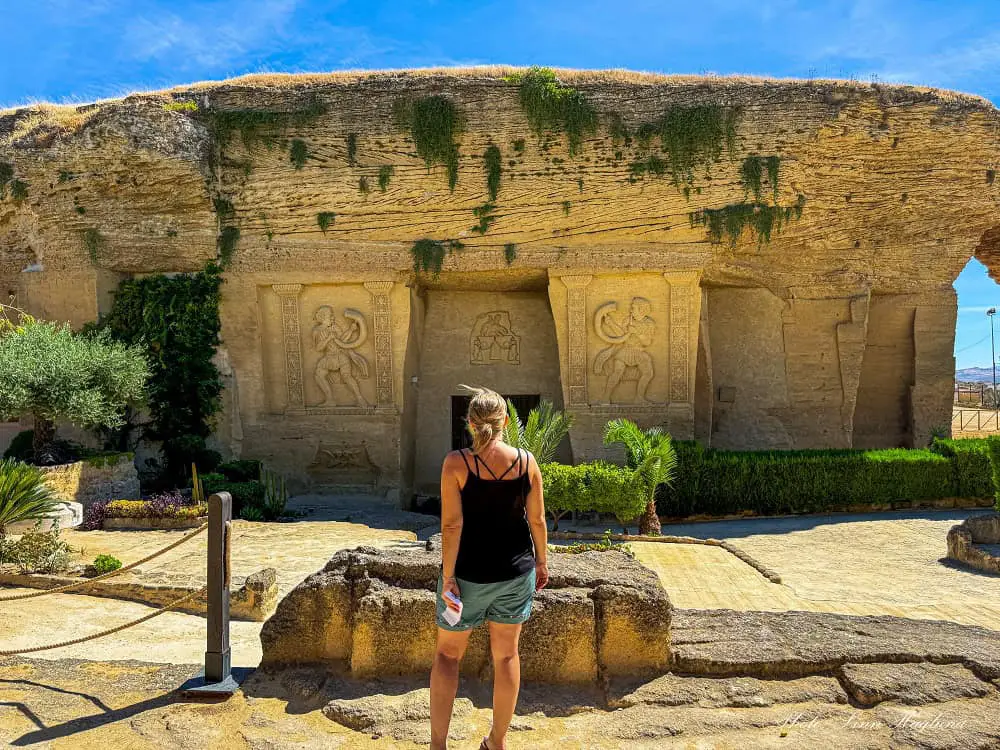
Often referred to as the Petra of Spain, Coto de las Canteras definitely gives the vibe of a miniature archaeological site in Jordan or Egypt. But instead, it’s located in the heart of Andalucia, in the underrated town of Osuna.
The Petra of Spain looks ancient, with giant, carved relics on the walls, but the truth is, this site was built in the early 2000s to resemble an ancient site and revive the memory of the ruins of the archaeological sites surrounding it. Besides being a tourist attraction, it’s also used for events.
I’ve been to Osuna many times before, but I’ve always been super unlucky and found Coto de las Canteras closed every time. But on our latest stopover, we were super happy to see that we got there in time to visit this magnificent place.
Read on for everything you need to know to visit Coto de las Canteras in Osuna, Spain!
Disclosure: This post may contain affiliate links. That means that if you make a purchase through one of those links, I will get a small commission at no extra cost to you.

Hi, I’m Linn Haglund, the face behind Brainy Backpackers. I’ve been based in Spain for the last 10+ years, and travel locally and abroad whenever I have a chance. I’m passionate about responsible travel, slow and off the beaten path travel, and outdoor activities, especially hiking. I’m currently slow traveling in my van Persistence (Persi among friends) with my fiancée Mohammed and rescue puppy Atlas. I’m excited to help you explore this planet responsibly!
PIN IT FOR LATER!

🙋JOIN OUR THRIVING FACEBOOK COMMUNITY FOR ANDALUCIA TRAVEL TIPS AND INSPIRATION!
Why visit Coto de las Canteras in Osuna?
Coto de las Canteras is one of my favorite attractions in Osuna. And I can’t believe I haven’t managed to visit it before.
If you’re looking for unique places to visit and hidden gems in Andalucia, Coto de las Canteras is a must. While it’s not an ancient site in itself, it’s surrounded by history and honors centuries of Osuna’s history.
I can with certainty say that you won’t find anything like it anywhere in Andalucia, and Osuna is one of my top picks for day trips from Seville due to this and other incredible attractions.
Even if you’re on a road trip in Andalucia, driving from Seville to Malaga, Osuna is a great stop. Even with a couple of hours, you can see the Coto de las Canteras, the views of the city from the Collegiate Church of Our Lady of the Assumption, and stroll down to Plaza Mayor and see the palaces in the UNESCO street, Calle San Pedro.
What to expect & some history
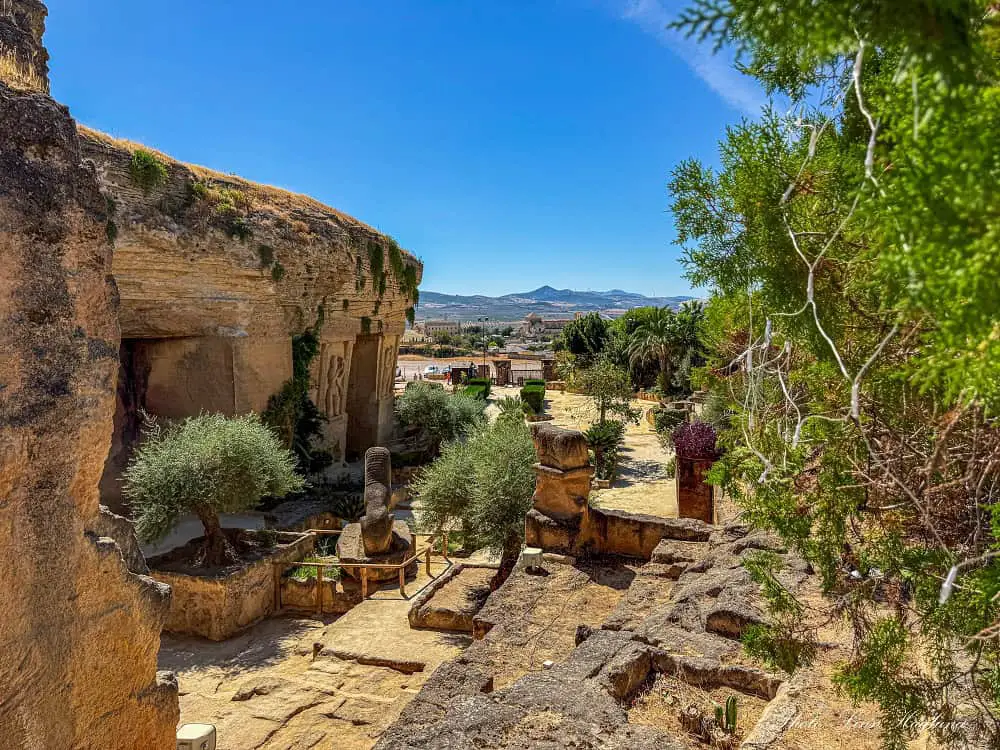
First of all, when visiting Coto de las Canteras, don’t expect an ancient, historical site with ancestral relics.
The site was created around 2004-2006.
That said, the relics have been carved to resemble ancient Turdetani artwork that was found in the nearby necropolis. The originals have been transported to the Spanish capital and are kept in the Madrid Archaeological Museum.
Now, I haven’t been to Petra in Jordan and can only compare this site to the pictures I’ve seen.
But I have been in Egypt, traveling around to several major archaeological sites, like the ones in Luxor and Aswan, and while I can see why this site has gotten the nickname “Petra of Spain”, I also wouldn’t really get my expectations too high.
Don’t get me wrong.
Coto de las Canteras is amazingly made, and it does look like an ancient temple, but it’s also a much smaller size than any site I’ve seen in Egypt, and what I imagine Petra would be from pictures and videos I’ve seen.
With that in mind, I think you’ve got the right expectations.
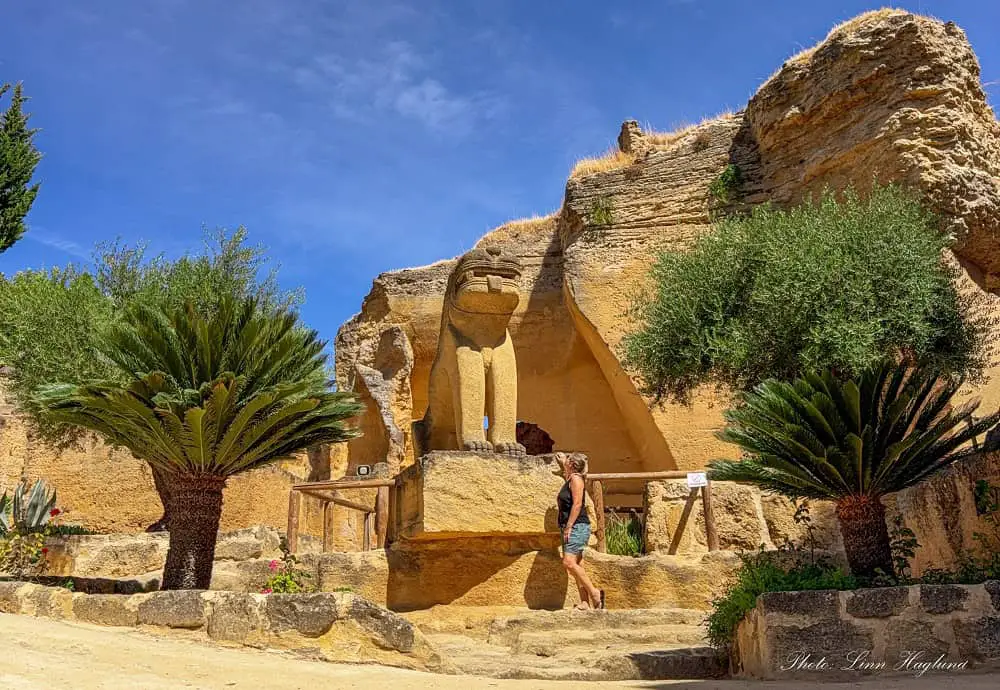
I absolutely loved walking around the gardens, where different statues, like a giant lion, decorate the perfectly manicured space.
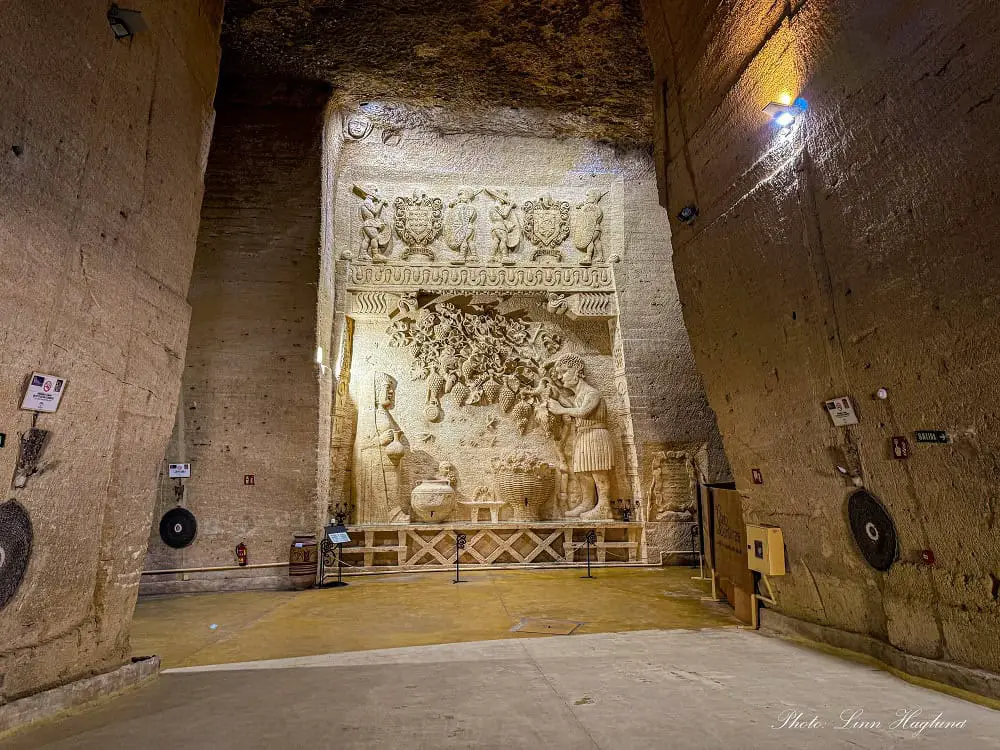
The giant rock that makes up the Coto de las Canteras is really cool, and upon entering, I was met by a beautiful carved rock wall in a large hall with 25 meters to the ceiling. The carvings are apparently enlarged replicas of those found in the quarry.
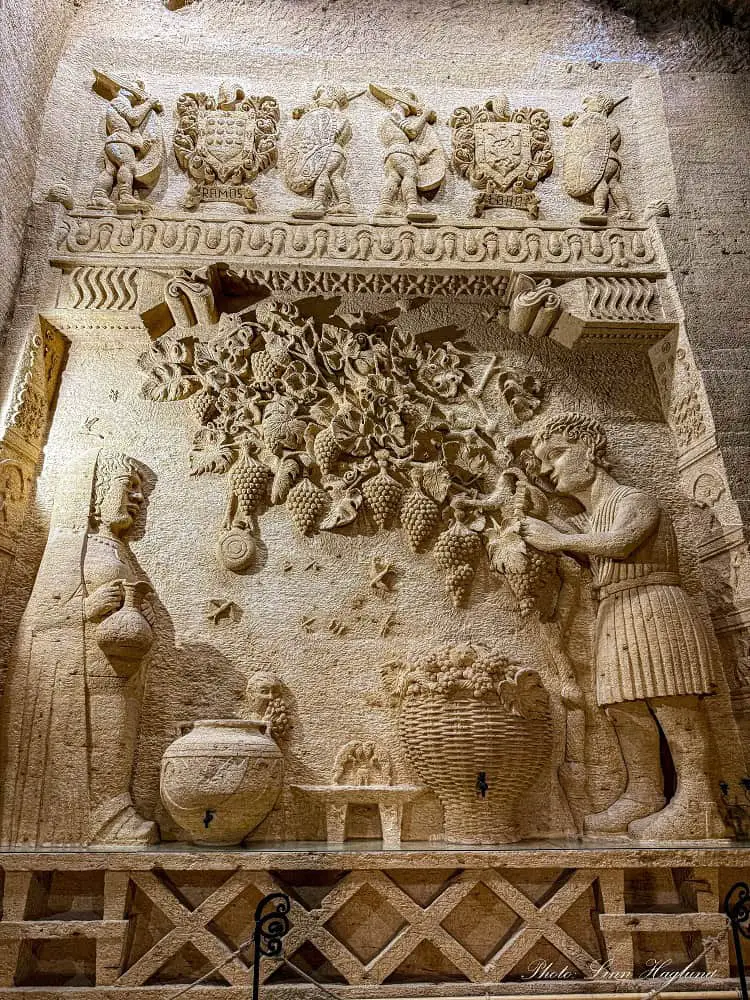
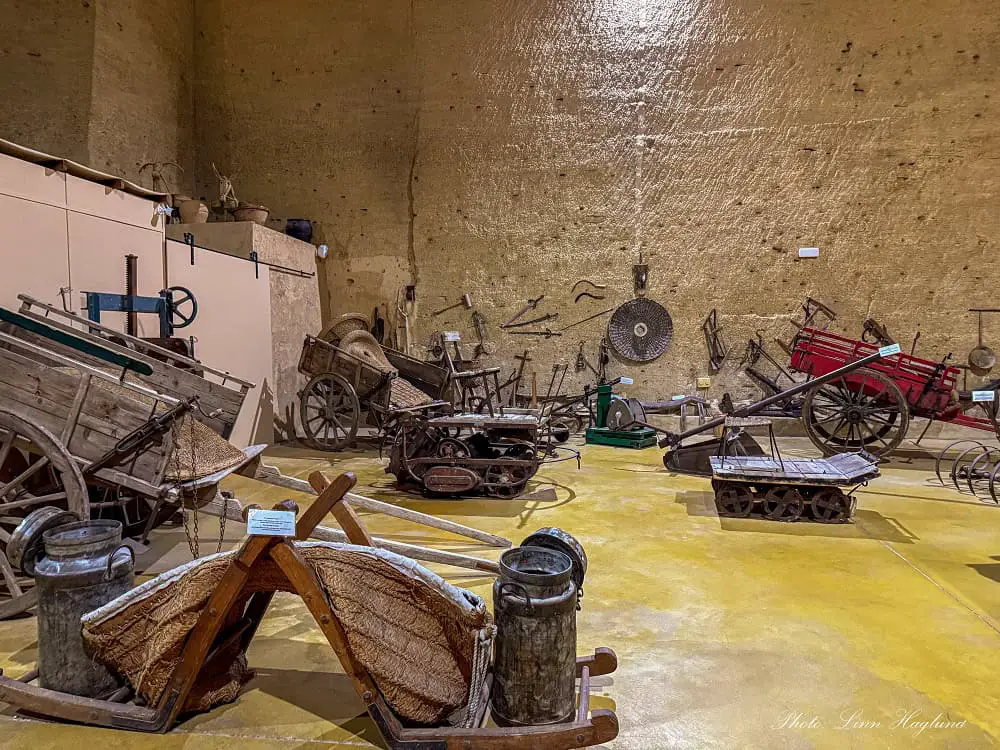
The rest of the walls were plain, so there wasn’t much more to see inside other than a small exhibition of old farming tools inside, which is interesting.
Besides offering tourist visits, Coto de las Canteras is used as a concert hall and event hall, according to the locals, the acoustics inside are amazing. It’s actually Spain’s largest natural auditorium, which is pretty cool.
But while the auditorium is a new attraction, the quarry has been used for centuries, and Roman ruins, including a necropolis, have been dug out nearby.
The limestone from the area was carved out in the 16th century to build Osuna’s now famous baroque palaces.
Altogether, visiting Coto de las Canteras is a really nice experience that took me about 20 minutes walking around the hall, looking at the museum items, and wandering around the garden.
How to get tickets
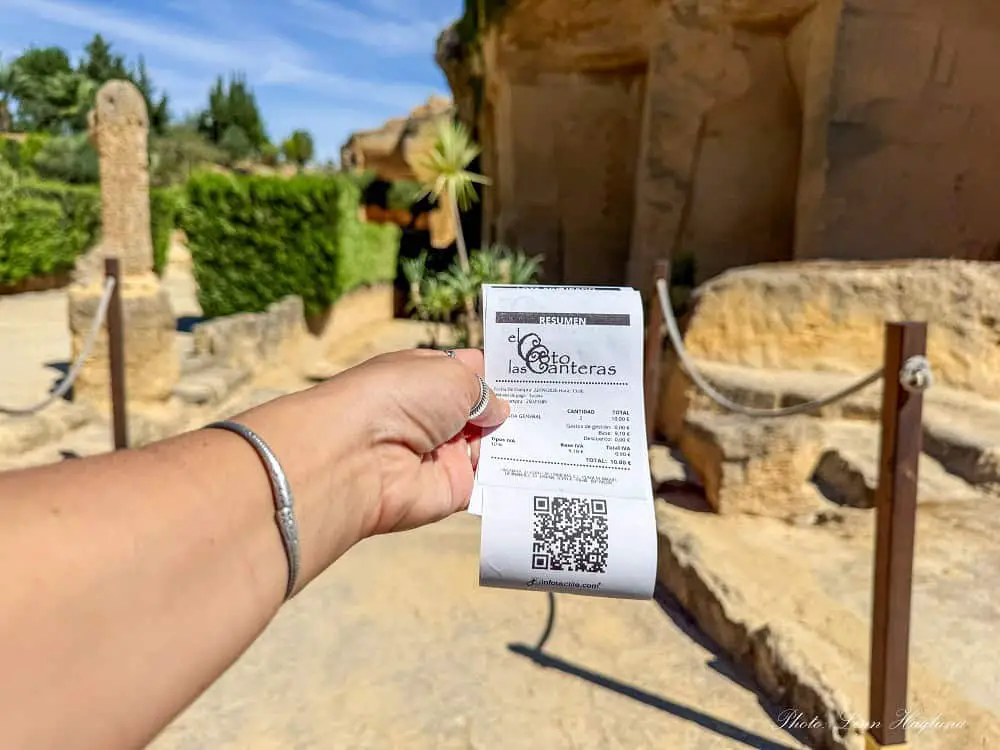
You can purchase tickets directly at the entrance. Osuna is not a busy tourist destination, so you won’t struggle to get tickets as long as you get there at least 30 minutes before closing.
Opening hours are 10:00-14:00, so last entry is at 13:30.
We paid 5 Euros per person and were able to pay by card. Dogs weren’t allowed, so we had to enter separately, while one was outside waiting with Atlas.
You can also book a guided tour to learn more about the site. It’s a great tour that also takes you to the Necropolis, another interesting attraction not far from the Coto de las Canteras that’s well worth visiting!
Things to do nearby
I highly recommend combining Coto de las Canteras with the Roman Necropolis; there’s actually a 45-minute-long hike that takes you along several Roman ruins.
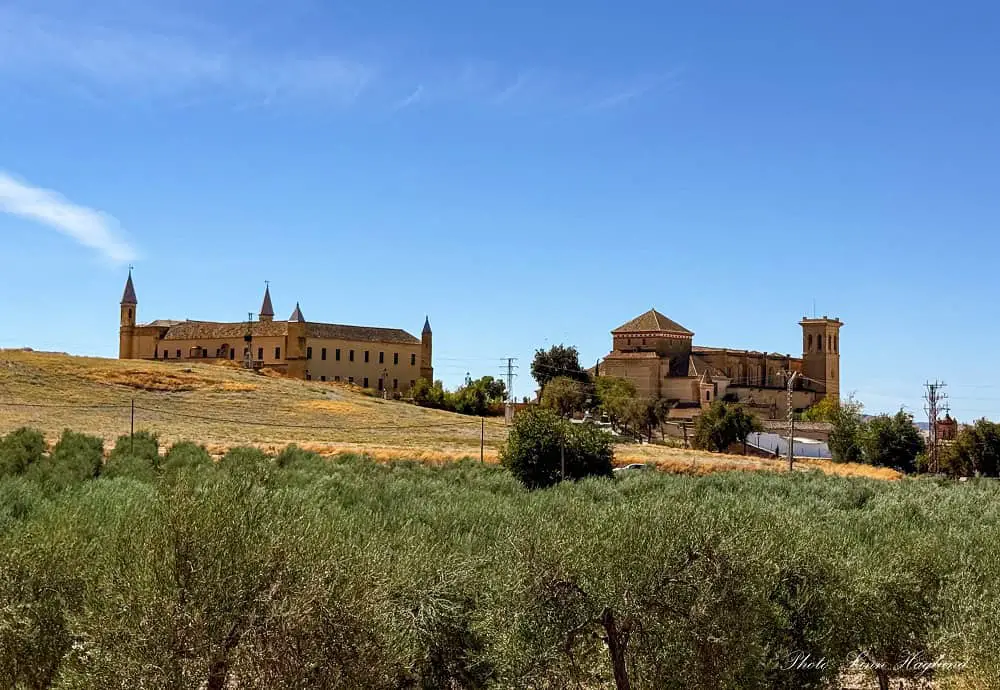
The Coto de la Cantera is also just a 10-minute walk from the Collegiate Church of Our Lady of the Assumption and Osuna University, which are must-sees in Osuna.
If you spend 2 days in the town, I recommend doing the above sites on one day and the center with the palaces and Game of Thrones Museum on the other day.
Summing up: Is it worth visiting the Petra of Spain?
As I’ve already mentioned several times, YES! I absolutely think it’s worth visiting the Petra of Spain. Even though it’s way smaller in scale, it’s a truly unique site in one of the most underrated historical towns in Andalucia.
Though the relics on the walls aren’t as ancient as they indicate, they’re inspired by actual archaeological finds in the area, so it kind of feels historic anyway.
For me, it’s been one of those places I just had to go visit, and as soon as I had the chance, I didn’t regret it at all.
Happy travels!